
McDonald's Porter’s Five Forces Analysis (2026): The Battlefield Report

Written by Nicholas • Reviewed by Reginald, our mentor guide
⏱️ Read Time: 6-8 minutes
📅 Published February 23, 2026 • Updated June 13, 2026
TL;DR
The Battlefield Report: We used Porter’s Five Forces to analyze the QSR industry.
The Threats: Intense rivalry, picky buyers and endless substitutes make this a brutal industry.
The Defenses: McDonald’s massive scale lets them dictate prices on commodity supplies and its real estate moat blocks new entrants.
The Verdict: A phenomenal business in a fiercely tough industry.
Sources: McDonald’s Form 10-K and Restaurants by Market, Yum China ‘s Annual Report (for KFC China), Restaurant Brands International’s Global Store Count (for Burger King) and QSR Magazine.
Date last checked: June 2026. Figures are based on company filings, investor materials and publicly available industry sources at the time of writing.
Welcome back to the journey! In our last case study, we got a 30,000-foot view of McDonald's with a Business Model breakdown and a SWOT analysis. Now, it's time to zoom in on the battlefield itself.
To truly understand a company, we need to analyze the industry it operates in. Is it a calm sea or a bloody ocean?
For this, we'll use one of the most powerful tools in an investor's toolkit: Porter's Five Forces. This framework helps us look beyond McDonald’s as a familiar brand and ask a tougher question: how hard is the industry it competes in?
In this post, we’ll look at rivals, new entrants, suppliers, substitutes and buyers before deciding what the full picture says about McDonald’s competitive position.
Let's break it down.
Force 1: Rivalry Among Competitors (High)
The first thing that comes to mind when we think of McDonald's is its rivals. The truth is, the competition in the Quick Service Restaurant (QSR) space is intense.
Sizing Up the Fast Food Giants
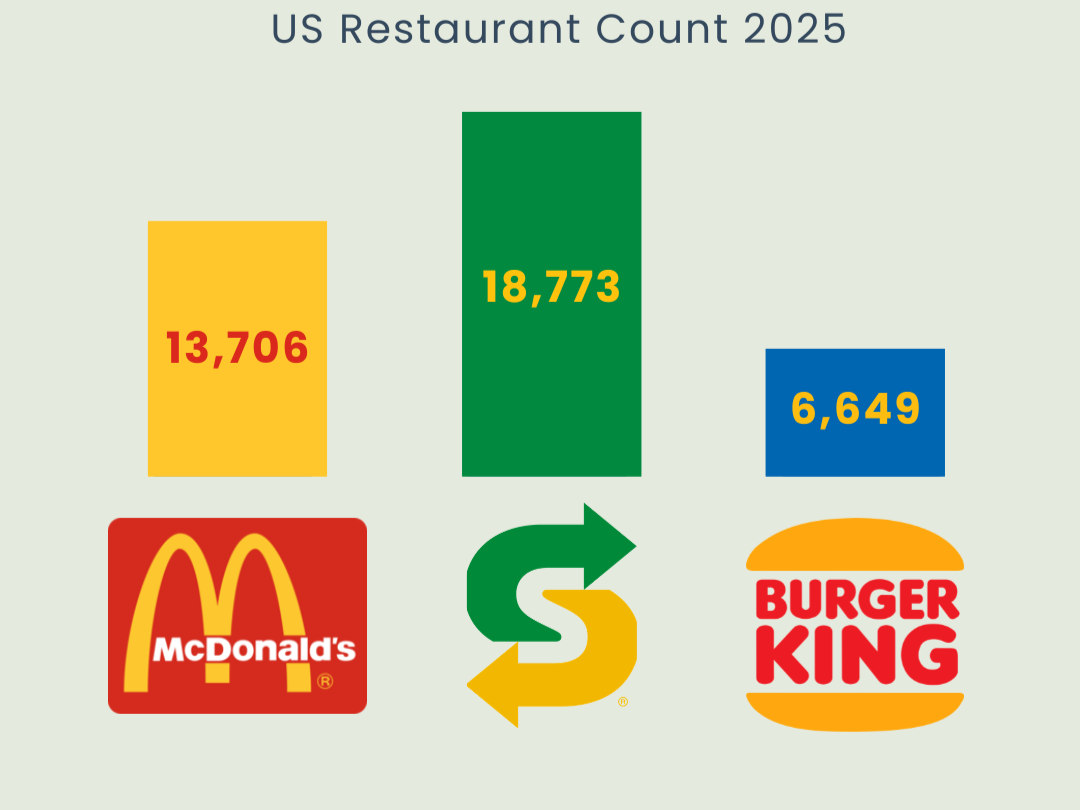
The fast-food market is packed with established giants. At the end of 2025, McDonald's operated 13,706 stores in the US, competing with rivals like Subway, with 18,773 stores, and its direct burger competitor, Burger King, with 6,649 stores.
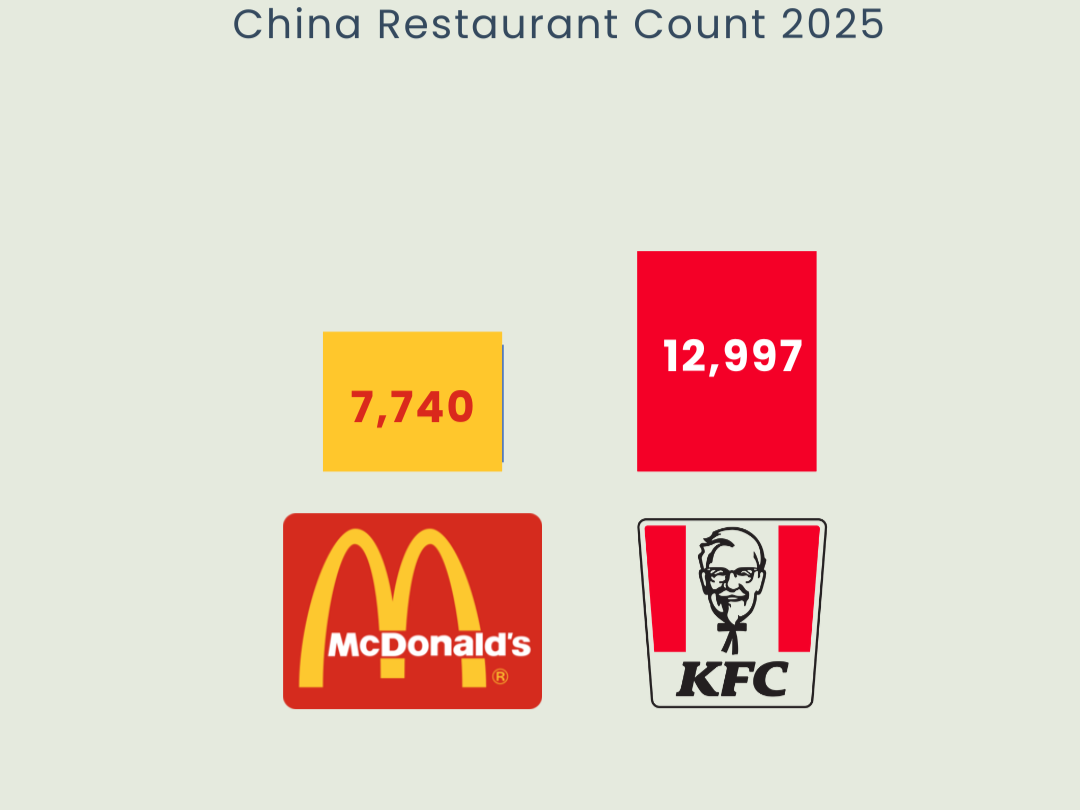
Even on the global stage, where McDonald's has the largest footprint, it faces fierce regional competition. In key growth markets like China, McDonald’s with 7,740 stores still lags far behind KFC, which dominates with over 12,997 stores.
So, what does this mean for us as investors? Because the rivalry is so fierce, it's hard to stand out. Walk into any major QSR today and you'll see similar tech – kiosks, apps, delivery – and similar menus.
While McDonald's has an edge with clever local collaborations (like the Nasi Lemak Burger here in Singapore!), the core offerings are easily matched by competitors.
This intense rivalry puts constant pressure on everyone's profitability.
Force 2: Threat of New Entrants (Low)

On the flip side, how easy is it for a new challenger to enter the battlefield? The way I see it, the threat of new entrants is very low.
The barriers to entry are just massive:
Brand Power: Why would a customer trust a brand-new burger joint when they have decades of reliable experience with McDonald's?
Economies of Scale: With tens of thousands of stores, the big players can negotiate rock-bottom prices for everything – a cost advantage a new entrant simply cannot match.
Real Estate: McDonald’s often owns or controls the land and buildings behind its restaurants. To compete at the same scale, a new rival would need thousands of good locations, which would cost a lot of money. That gives McDonald’s a location advantage.
This is where Five Forces connects to moat thinking. Five Forces shows us how hard the battlefield is; a moat shows us what defenses McDonald’s brings into that battlefield.
Force 3: Bargaining Power of Suppliers (Low)
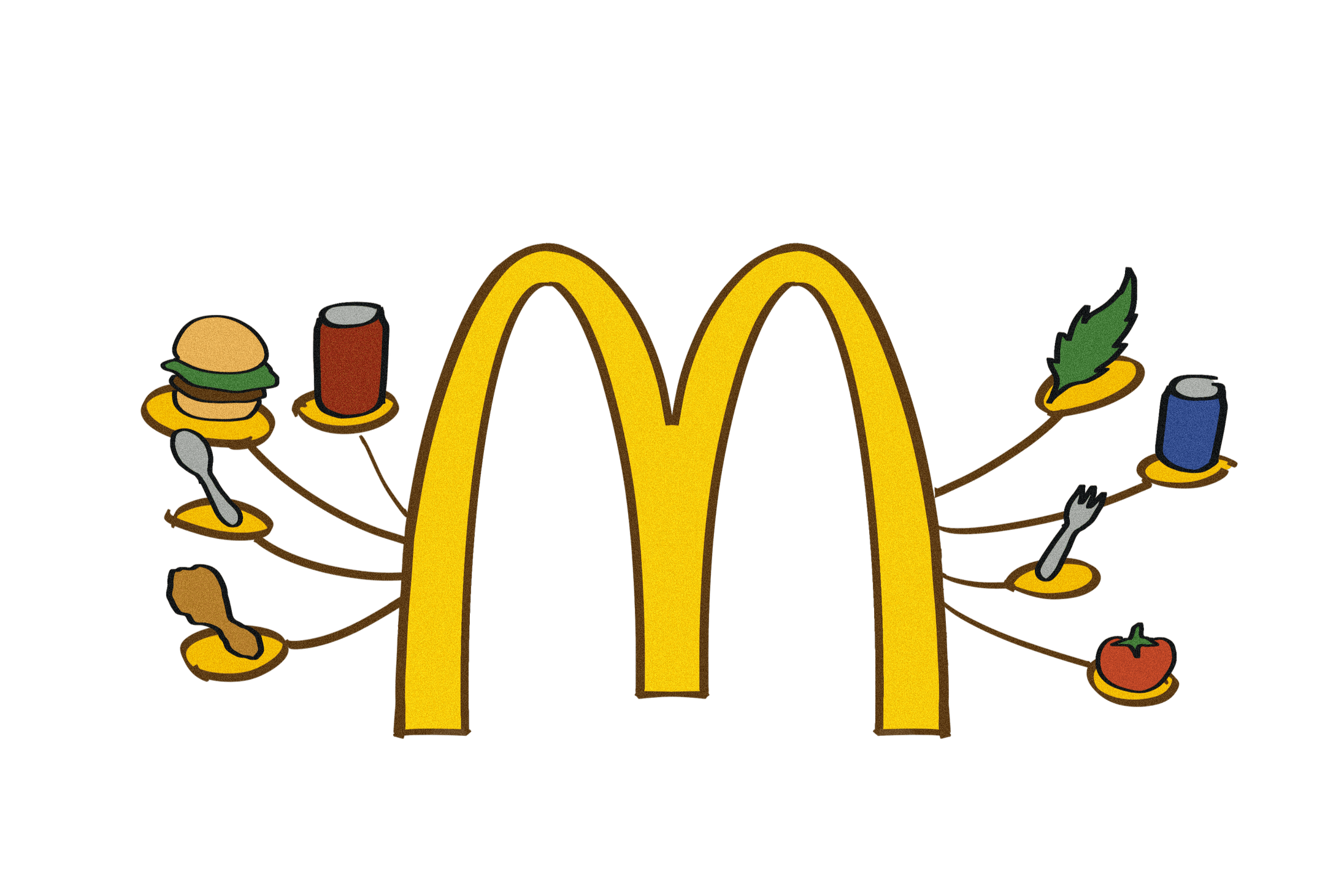
What about the suppliers – the farmers and manufacturers providing the beef, buns and potatoes? Do they have any leverage?
In this case, supplier power is extremely low.
McDonald's is one of the largest buyers of food in the world. It collectively spends an estimated $43 billion in annual food and packaging procurement. This massive scale allows them to dictate terms and negotiate highly favorable prices.
Furthermore, they are buying commodities – basic, undifferentiated products. If one beef or potato supplier raises prices, McDonald's can easily switch to another with minimal disruption.
This leaves individual suppliers with virtually no leverage, which is a significant advantage for McDonald's in protecting its profit margins.
Force 4: Threat of Substitute Products (High)

A "substitute" isn't just another burger; it's any other option that satisfies the need for a quick meal. The threat from these substitutes is high.
Premium: You have fast-casual restaurants like Shake Shack or Five Guys, where you can pay a little more for a higher-quality meal. With menu prices having risen significantly over the last decade, the gap has narrowed between “fast-food” and “fast-casual”.
Healthy: There are healthier alternatives, like a salad bar or simply a home-cooked meal, which have become more popular since the pandemic.
Cheap and Fast: You have cheaper and faster options, like a pre-packaged sandwich from 7-Eleven or, here in Singapore, a quick meal from a hawker centre.
This wide range of substitutes forces McDonald's to constantly innovate to stay relevant.
Force 5: Bargaining Power of Buyers (High)
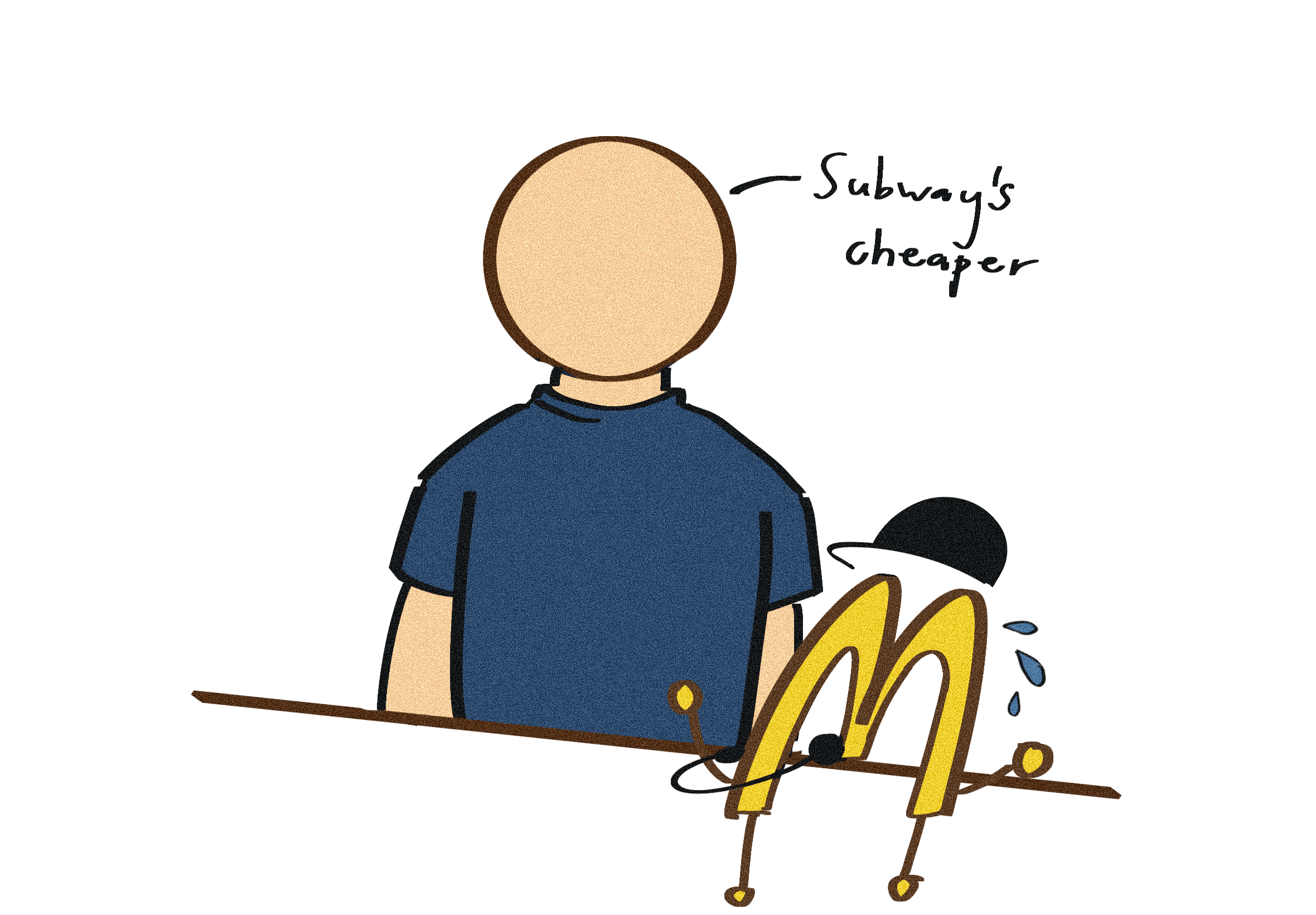
In the fast-food world, the customer is king. Buyer power is definitely high.
As we saw with substitutes, It costs a customer nothing – in time or money – to walk out of a McDonald's and into a KFC, a Subway or a local cafe.
The industry was also built on providing value, which forces McDonald's to offer promotions and "value meals" to attract and retain price-sensitive customers.
Because buyers have so many choices, McDonald's has to constantly cater to their tastes and wallets.
- Rivalry among competitors: High
A crowded QSR battlefield keeps pressure on profits. - Threat of new entrants: Low
Few can match McDonald’s brand, scale, systems and real estate footprint. - Bargaining power of suppliers: Low
McDonald’s size gives it strong negotiating power. - Threat of substitute products: High
Customers have many other quick-meal options. - Bargaining power of buyers: High
Customers can switch easily and are price-sensitive.
Conclusion: A Tough Business
If we visualize this battlefield, the picture is clear: McDonald's is a titan operating in a very tough, low-margin industry.
The intense rivalry, high threat of substitutes and powerful buyers create constant pressure on profits.
While high barriers to entry and low supplier power offer some protection, the overall landscape is fiercely competitive.
This tells us that while McDonald's is a phenomenal business, the QSR industry itself is not an easy place to be.
Stay tuned, because in our next article, we'll untangle McDonald's financials to see exactly how they manage to thrive in such a challenging environment!
Subscribe to our newsletter to join the journey and get the next post delivered straight to your inbox!
Let’s keep growing together 🌱
— Nicholas
Frequently Asked Questions
-
Quick Service Restaurant. It's the industry term for fast food. Think of it as any place where you pay before you eat, the menu is standardized and speed is the priority — McDonald's, KFC and Subway are classic examples.
-
Porter's Five Forces is a framework developed by Harvard professor Michael Porter that helps investors and analysts judge how competitive an industry is. It examines five pressures: rivalry among competitors, the threat of new entrants, the threat of substitutes, the bargaining power of suppliers and the bargaining power of buyers. The stronger these forces, the harder it is for any company to consistently make good profits — regardless of how well-run they are.
-
Because size doesn't stop price wars. Even though McDonald's is a giant, it sells a product that is easily copied. To keep you coming back, they have to constantly fight with competitors on price, new menu items and speed. Being the biggest player doesn't mean the fight is any less brutal.
-
A moat is a competitive advantage that's hard for rivals to copy — just like a castle moat that keeps attackers out. McDonald’s real estate moat comes from the way it often owns or controls the land and buildings behind its restaurants. A new competitor would need years and a lot of money to build a similar network of good locations. That helps protect McDonald’s position and also gives it rental income from franchisees.
-
Because McDonald's is the biggest buyer. They spend around $40 billion a year on food and packaging. If a meat supplier tries to raise prices, McDonald's can just switch to another one. The supplier needs McDonald's more than McDonald's needs the supplier.
-
Any company in any industry. The five forces — rivalry, new entrants, substitutes, suppliers and buyers — exist in every market. The intensity of each force just varies. A pharmaceutical company faces very different pressures from a fast-food chain. That's what makes this framework so useful: once you learn it on McDonald's, you can apply the same thinking to any business you're considering.
-
No — this is just one step in the analysis. We know McDonald's is a great business in a tough industry, but we haven't looked at the price tag yet. In the next post, we'll dig into the financials to see if the numbers actually make sense.
Spotted an error?
Email us at contact@younginvestorjourney.com. We review factual corrections and update articles where needed.
Continue the Journey
Read this next: The Two Principles That Matter More Than Picking the Right Stock

The Two Principles That Matter More Than Picking the Right Stock

Porter’s Five Forces: A Beginner’s Guide

McDonald’s SWOT Analysis: Beyond the Burger
Watch on Instagram
Prefer the visual breakdown?



About Young Investor Journey
I’m Nicholas — a young investor learning out loud. With guidance from my mentor, Reginald, and illustrations by Timothy, we break down complex investing ideas into plain English — no fluff, no jargon, just clarity.
How We Think
We help you build a framework you can apply to any company. Our framework is simple: understand the business model first, confirm with official reports, then sanity-check with trusted sources. The goal is to teach you how to think — not what to buy.
Education Only: We are here to share what we learn, not to give financial advice. Always do your own research and consider your personal goals, risk tolerance and financial situation before investing.