
What is a Moat in Investing? A Beginner’s Guide to a Company’s Defenses
Written by Nicholas • Reviewed by Reginald, our mentor guide
⏱️ Read Time: 2-3 minutes (+ optional 50-second video)
📅 Published May 18, 2026 • Updated June 13, 2026
TL;DR
The Moat: A company's competitive defense — what makes it harder for rivals to steal its customers or squeeze its profits.
The Castle: A business with no moat is easier to attack. A business with a strong moat is much harder to compete away.
McDonald's: Brand, scale and real estate work together — no single wall, but a lot of them.
Reginald's Warning: Moats can weaken over time. Always ask whether the moat is getting wider or narrower.
Why do some businesses stay profitable for decades, while others get copied almost overnight? The answer often comes down to one idea: the moat.
A moat is a company’s advantage — its defense against competition. It is what makes it harder for rivals to steal its customers, copy its model, or squeeze its profits over time.
Think of a Castle
The easiest way to understand a moat is to think of a castle.
A castle with no defenses is easier to attack. A castle with a moat is much harder to invade.
A business works the same way. If competitors can easily copy what a company does, undercut its prices, or replace it with something better — that strength may not last very long.
In business, a moat protects profits.
Moat vs. Strength
A strength is something a company is good at today.
A moat is stronger than that. It is a strength that is hard for competitors to copy. It helps protect the business over time.
For example, having a popular product can be a strength but having a brand, scale or location advantage that competitors struggle to match may be a moat.
Moat Cheat Sheet
🏰 The Concept: A moat is what protects a company from competition.
🛡️ The Benefit: It helps defend customers, margins and profits over time.
⚠️ The Risk: Moats can weaken — and some that look strong are not as durable as they appear.
❓ The Beginner Question: If a competitor wanted to attack this business, what makes that difficult?
Common Types of Moats Investors Look For
Brand: Customers trust or recognize the company.
Cost advantage: The company can produce or operate more cheaply than competitors.
Network effects: The product becomes more useful as more people use it.
Switching costs: Customers find it difficult or inconvenient to leave.
Scale advantage: The company benefits from being much larger than its rivals.
Location or real estate advantage: The company controls valuable locations that competitors cannot easily copy.
McDonald’s as an Example
We have been using McDonald's as our learning case across this site — and it is one of the clearest moat examples around.
What makes it interesting is that its moat does not come from just one thing. It has several defenses working together.
Brand Power
People recognize McDonald's almost anywhere in the world. Even if you are not a fan, you know the Golden Arches. That familiarity is a form of protection — it keeps customers coming back and gives the brand a head start over any new competitor trying to build trust from scratch.
Scale
With 45,356 restaurants globally, McDonald's can buy, advertise and operate at a scale most competitors simply cannot match. That scale creates cost advantages that are very hard for smaller rivals to replicate.
Real Estate
As we broke down in our McDonald's business model analysis, McDonald's often owns or controls the land and buildings behind its restaurants. Those prime locations have been built up over decades. A new competitor cannot copy that overnight — or even over a decade.
McDonald’s moat is not built from one single advantage.
Its brand brings people in.
Its scale makes it difficult for smaller rivals to match.
Its real estate gives it locations that cannot be copied overnight.
Together, these advantages create a stronger defense than any one of them would on its own.
Not All Moats Are Equal
Weak moat: Competitors can copy it quickly.
Beginner question: Could someone else do this next year?
Narrow moat: The advantage exists, but may not last very long.
Beginner question: Can it protect profits for a few years?
Wide moat: The advantage is durable and hard to copy.
Beginner question: Would it take years and lots of money to attack?
Brands can fade. Great locations can become less valuable. Cost advantages can disappear. Technology can shift the entire battlefield. Customer habits can change.
So don’t just ask: does this company have a moat?
Ask instead:
Is the moat still strong?
Is it getting wider or narrower?
What could break it?
A moat only matters if it continues to protect the business over time. Some of the most confident-looking moats in history turned out to be shallower than they appeared.
Where Does Porter's Five Forces Come In?
This is where moat thinking and Five Forces connect — and it is a connection worth understanding.
A moat tells you what protects the company. Porter's Five Forces tells you what the company needs protection from.
Think of it this way:
The moat is the castle's defense.
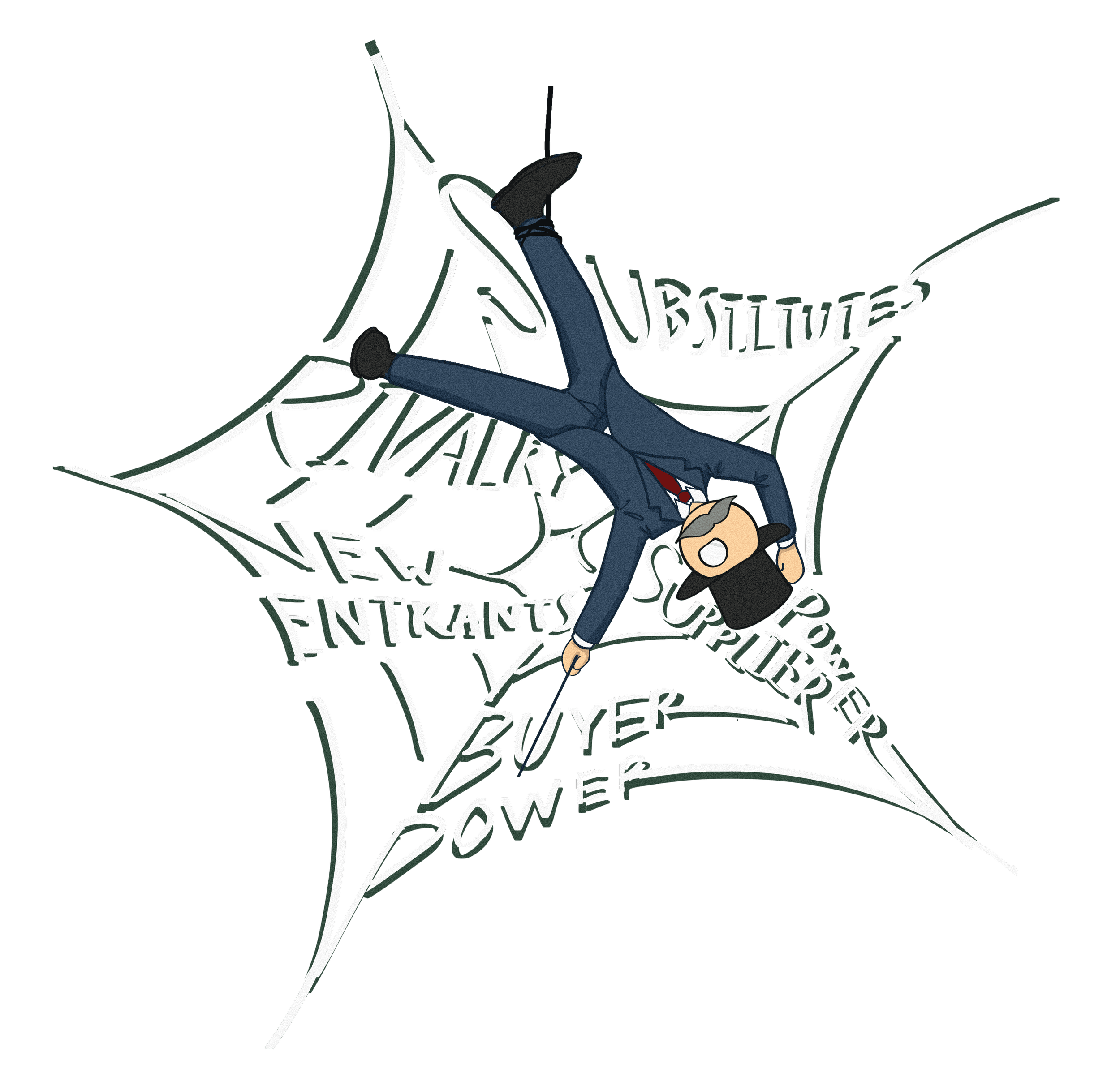
The Five Forces are the attacks — new rivals entering the market, existing competitors fighting harder, buyers demanding lower prices, suppliers raising costs and substitute products replacing what the company offers.
Moat analysis and Five Forces work well together because one looks at the defense, while the other maps the battlefield.
Moat Checklist: How to Test Whether an Advantage Can Last
Before deciding a company has a strong moat, ask:
What actually protects this company from competitors?
Is the competitive advantage hard to copy?
Does it protect profits, not just popularity?
Is the moat getting stronger or weaker over time?
What could break the moat?
If you cannot answer those questions clearly, the moat may not be as strong as it looks.
Final Words
A moat is a company's competitive advantage.
It can come from brand, scale, location or other structural advantages. The reason it matters comes down to one idea: the stronger the moat, the harder it is for competition to damage the business over time.
If you are just starting out, you do not need to identify every type of moat immediately.
Start with one question: what protects this business?
That question alone will help you think more clearly about companies, competition and long-term investing.
What’s Next?
Once you understand a company’s moat, the next step is to look at the whole business.
That’s where SWOT analysis comes in. SWOT helps you look at a company’s strengths, weaknesses, opportunities and threats in one simple framework.
You can continue with our McDonald’s SWOT Analysis: Beyond the Burger to see how moat thinking fits into a fuller company breakdown.
If you want to go deeper into competition after that, read Porter’s Five Forces: A Beginner’s Guide or see how we applied it to McDonald’s.
Let’s keep growing together 🌱
— Nicholas
Prefer to watch? Here's the 50-second version:
Having trouble viewing the embedded video? Watch it on Instagram: What is a Moat?
Frequently Asked Questions
-
A moat is a company's competitive advantage — the set of defenses that make it harder for rivals to steal its customers, copy its model, or squeeze its profits. The term comes from the water-filled trench that protected medieval castles. In investing, a strong moat suggests a business has a better chance of staying profitable over the long term.
-
Not always. A company can have a strong moat and still have real problems — the business might be declining, management might be making poor decisions, or the moat itself might be quietly weakening. A moat tells you the company has good defenses. It does not tell you the company is well-run, growing or priced fairly enough to be worth buying.
-
Yes — and this is one of the most important things to understand. Moats can weaken when technology changes, customer habits shift, competitors improve, or management makes poor strategic decisions. Nokia had a moat. Yahoo had a moat. Always ask whether the moat is getting wider or narrower.
-
Not automatically. A brand only functions as a moat if it genuinely helps the company attract customers, charge better prices, or defend its profits. A well-known brand that people have stopped trusting or caring about is not much of a defense.
-
Investors care about moats because they want to know whether a company’s profits can last. If competitors can easily copy the business, those profits may disappear. A moat does not make a stock a buy, but it helps investors think about business durability.
-
A moat looks inward at what protects the company — its specific competitive advantages. Porter's Five Forces looks outward at what pressures the entire industry, including threats from new entrants, rivals, substitutes, buyers and suppliers. Used together, one tells you about the defense and the other maps the battlefield.
Spotted an error?
Email us at contact@younginvestorjourney.com. We review factual corrections and update articles where needed.
Continue the Journey
Read this next: McDonald’s SWOT Analysis: Beyond the Burger

McDonald’s SWOT Analysis: Beyond the Burger

Porter’s Five Forces: A Beginner’s Guide
McDonald's Five Forces Analysis: The Battlefield Report
About Young Investor Journey
I’m Nicholas — a young investor learning out loud. With guidance from my mentor, Reginald, and illustrations by Timothy, we break down complex investing ideas into plain English — no fluff, no jargon, just clarity.
How We Think
We help you build a framework you can apply to any company. Our framework is simple: understand the business model first, confirm with official reports, then sanity-check with trusted sources. The goal is to teach you how to think — not what to buy.
Education Only: We are here to share what we learn, not to give financial advice. Always do your own research and consider your personal goals, risk tolerance and financial situation before investing.